3501 Delete Nodes From Linked List Present In Array
3501 Delete Nodes From Linked List Present In Array
Delete Nodes From Linked List Present in Array 
You are given an array of integers nums and the head of a linked list. Return the head of the modified linked list after removing all nodes from the linked list that have a value that exists in nums.
Example 1:
Input: nums = [1,2,3], head = [1,2,3,4,5]
Output: [4,5]
Explanation:

Remove the nodes with values 1, 2, and 3.
Example 2:
Input: nums = [1], head = [1,2,1,2,1,2]
Output: [2,2,2]
Explanation:

Remove the nodes with value 1.
Example 3:
Input: nums = [5], head = [1,2,3,4]
Output: [1,2,3,4]
Explanation:
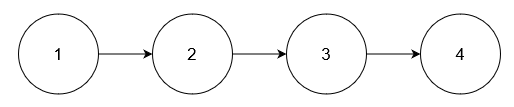
No node has value 5.
Constraints:
1
2
3
4
5
6
1 <= nums.length <= 105
1 <= nums[i] <= 105
All elements in nums are unique.
The number of nodes in the given list is in the range [1, 105].
1 <= Node.val <= 105
The input is generated such that there is at least one node in the linked list that has a value not present in nums.
1
2
3
4
5
6
7
8
9
10
11
12
13
14
15
16
17
18
19
20
21
22
23
24
25
26
27
28
29
30
31
32
33
34
35
36
37
38
39
40
41
42
43
44
45
46
47
48
49
50
51
52
53
54
55
56
57
58
59
60
61
62


/**
 * Definition for singly-linked list.
 * type ListNode struct {
 *     Val int
 *     Next *ListNode
 * }
 */
func modifiedList(nums []int, head *ListNode) *ListNode {
    var prev *ListNode = nil
    sort.Ints(nums)
    temp := head
    for temp != nil {
        //found := false
        if binSearch(nums, temp.Val) {
                    if (prev == nil) {
                        //fmt.Println(temp.Val, head.Val, "B")
                        temp = temp.Next
                        head = head.Next

                    } else {
                        //fmt.Println(temp.Val, head.Val, "A")
                        prev.Next = temp.Next
                        temp = temp.Next
                    }
                } else {
                     prev = temp
                    temp = temp.Next
                }
            }


    return head
}
func binSearch(arr []int, val int) bool {
    start := 0
    end := len(arr)-1

    for start <= end {
        mid := (start + end)/2
        if (arr[mid] < val){
            start = mid + 1
            continue
        }

        if (arr[mid] > val){
            end = mid - 1
            continue
        }

        if (arr[mid] == val){
           return true
        }
    }
    //fmt.Println(arr, val)
    return false
}
This post is licensed under CC BY 4.0 by the author.