2646 Kth Largest Sum In A Binary Tree
2646 Kth Largest Sum In A Binary Tree
Kth Largest Sum in a Binary Tree 
You are given the root of a binary tree and a positive integer k.
The level sum in the tree is the sum of the values of the nodes that are on the same level.
Return* the kth largest level sum in the tree (not necessarily distinct)*. If there are fewer than k levels in the tree, return -1.
Note that two nodes are on the same level if they have the same distance from the root.
Example 1:

1
2
3
4
5
6
7
8
9
10

**Input:** root = [5,8,9,2,1,3,7,4,6], k = 2
**Output:** 13
**Explanation:** The level sums are the following:
- Level 1: 5.
- Level 2: 8 + 9 = 17.
- Level 3: 2 + 1 + 3 + 7 = 13.
- Level 4: 4 + 6 = 10.
The 2nd largest level sum is 13.
Example 2:
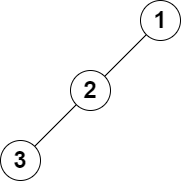
1
2
3
4
5

**Input:** root = [1,2,null,3], k = 1
**Output:** 3
**Explanation:** The largest level sum is 3.
Constraints:
1
2
3
4
The number of nodes in the tree is n.
2 <= n <= 105
1 <= Node.val <= 106
1 <= k <= n
1
2
3
4
5
6
7
8
9
10
11
12
13
14
15
16
17
18
19
20
21
22
23
24
25
26
27
28
29
30
31
32
33
34
35
36
37
38
39
40
41
42
43
44
45


# Definition for a binary tree node.
# class TreeNode:
#     def __init__(self, val=0, left=None, right=None):
#         self.val = val
#         self.left = left
#         self.right = right
class Solution:
    def kthLargestLevelSum(self, root: Optional[TreeNode], k: int) -> int:

        ls = []

        q = [root]
        def traverse(q):
            if len(q) == 0:
                return 0
            temp = []
            s = 0
            while(len(q) > 0):
                t =  q.pop()
                s += t.val
                if t.left != None:
                    temp.append(t.left)

                if t.right != None:
                    temp.append(t.right)

            q = temp
            ls.append(s)
            traverse(q)

        traverse(q)
        ls.sort(reverse=True)
        #print(ls)
        return ls[k-1] if k-1 >= 0 and k-1 < len(ls) else -1
This post is licensed under CC BY 4.0 by the author.